Konnichiwa!
While I was in Japan, I visited many different religious sites such as temples, shrines and cemeteries. Amongst them was The Meiji Shrine, The Kencho-ji Temple, The Tsurugaoka Hachimangū Shrine, The Oarai Isosaki Shrine, The Taizō-in Temple, The Ekoin Temple, and Okunoin Cemetery on Mount Kōya-san. They were all extremely beautiful places and all very peaceful. Every one of these places had a different set of style, all similar, but founded in different ways that made them unique.
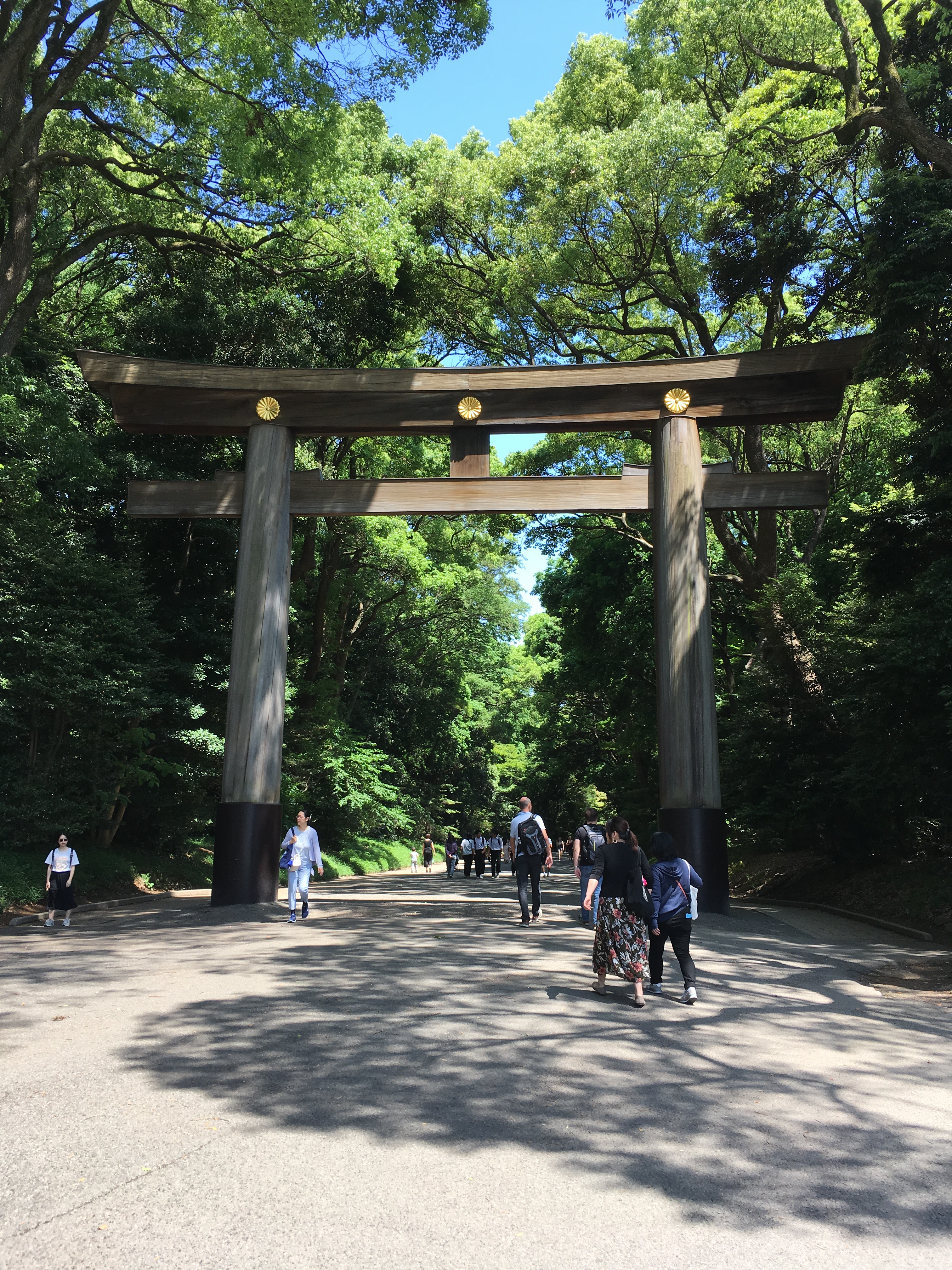
The Meiji-Jingu Shrine was built in honour of the beloved Meiji Emperor and his wife after his passing. The most interesting thing about this shrine was that a massive man-made forest surrounded the entire 170 acres. The pictures of the process in building this gigantic area of greenery, made the history and spirit of the shrine come to life. After the initial shrine was destroyed in 1945, the Japanese people donated time and money to rebuild the shrine we see today. For me this shows how much the emperor, even after death, is venerated and respected.
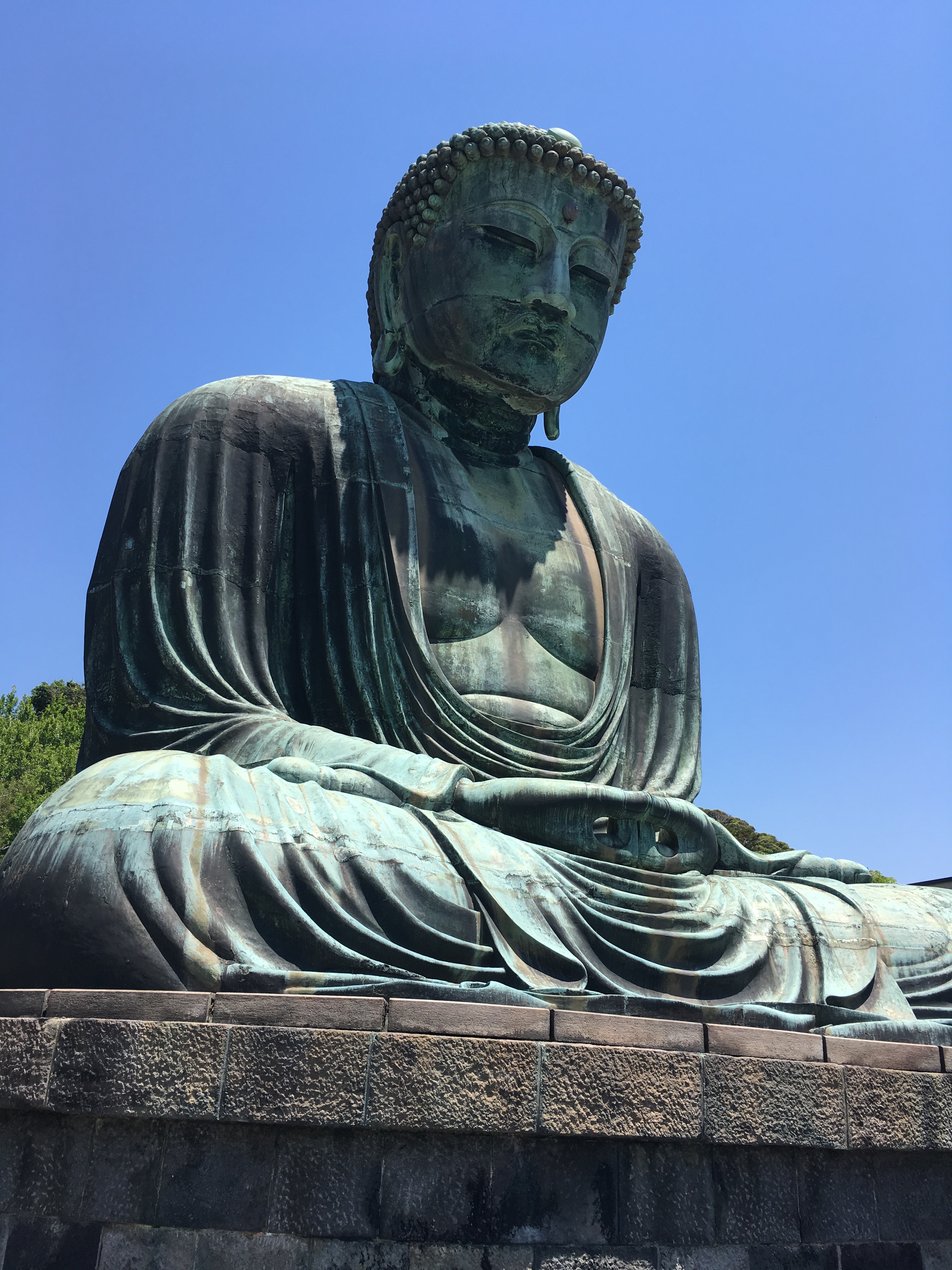
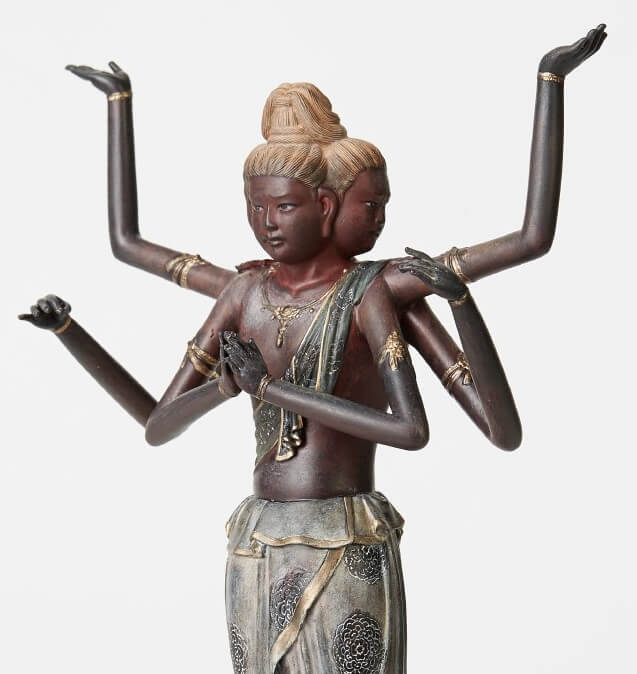
The Great Buddha in Kamakura’s Kōtoku-in Temple was amazing to see in person. I never would have thought that people were able to enter inside. The statue itself was very masculine in looks, especially when compared to the statues of Bonten, Taishakuten, Shaka Nyorai, and Ashura in Kōfukuji Temple in Nara. The difference between the masculine and feminine develops from the period they were created in. Kamakura period was emphasized by the samurai and, therefore, strength and power. However, the Nara period was focused on agriculture; there was no muscularity or dominance needed. Ashura herself has a very elegant and graceful aura about her. Her faces show peace and calm; there is no base emotions emitted by any of her three faces. The other statues, such as Kuhanda, Kendatsuba, and Hibakara, found in the national treasure museum are very animalistic, showing different emotions like anger, bloodlust, or some form or appearance of an animal. These animal-like statues remind me of the Egyptian gods and goddesses that are part human and part animal. The different expressions, features, and auras of all these statues make them come to life.
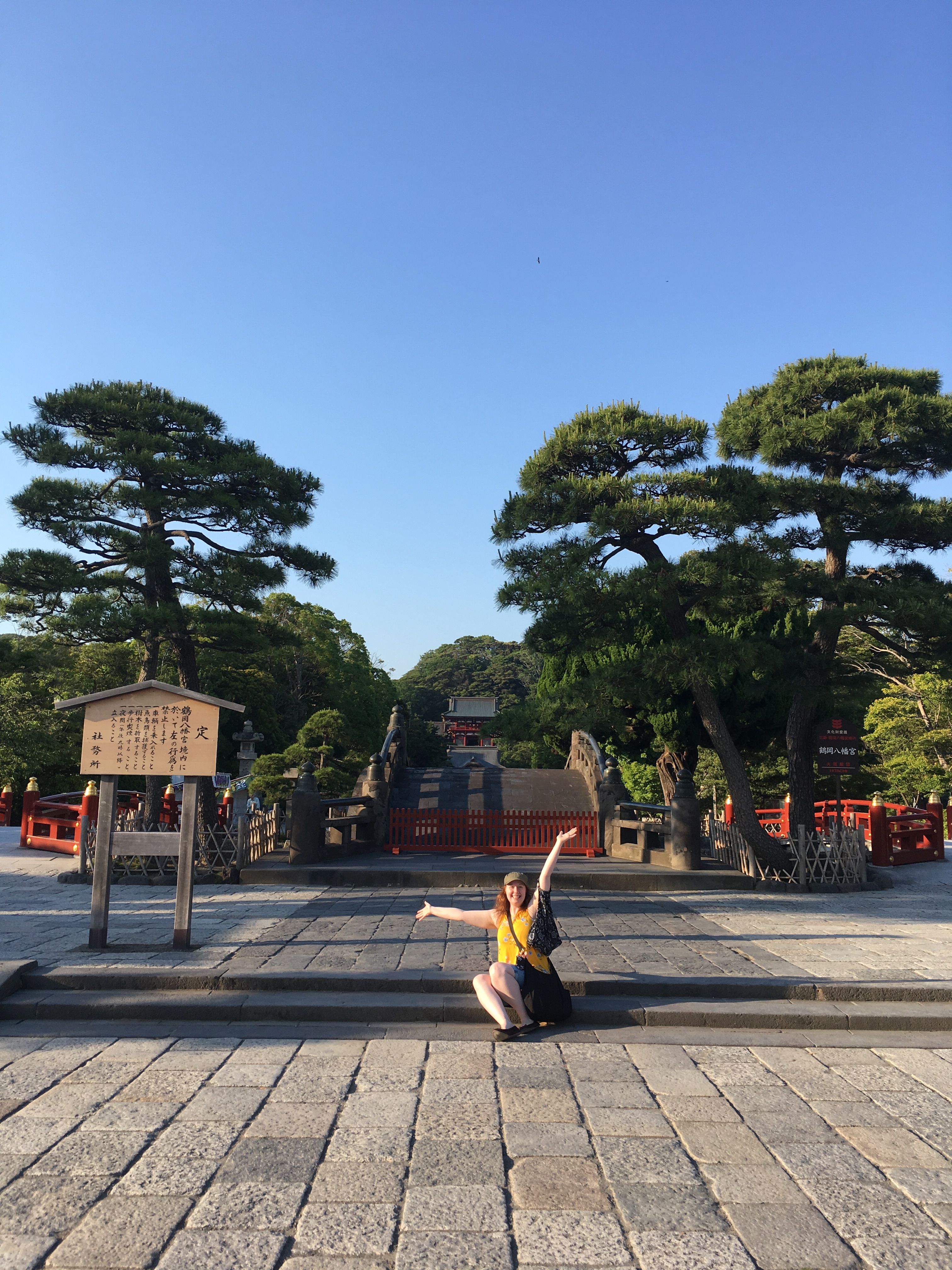
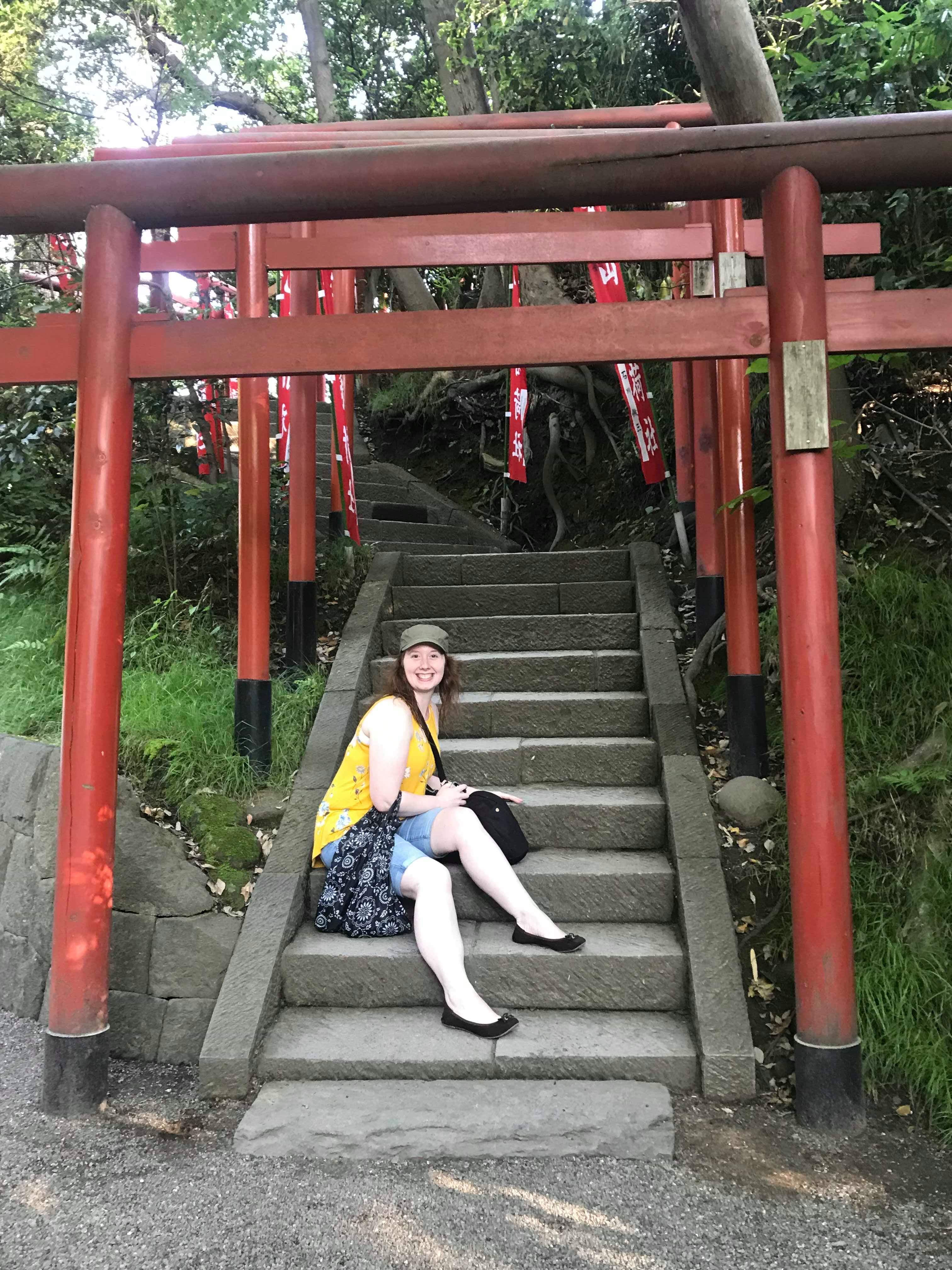
The Tsurugaoka Hachimangū Shrine was a beautiful spot. The appearance of the shrine buildings and parts of the grounds at first seemed more Buddhist than Shinto. We didn’t hear much about the history of the place when we went there, but I ended up looking it up later that night. I learned that until the Shinto and Buddhism Separation Order in 1868, it was called Tsurugaoka Hachimangū-ji and was also a Buddhist temple; the oldest one in Kamakura. The layout of the shrine as well as the town was also built according to Feng Shui and is surrounded by mountains and each direction was protected by the gods: Genbu (North); Seiryū (East); Byakko (West); and Suzaku (South). The most aestheticly pleasing are the Genpei ponds. These beautiful ponds have white lotuses in the east pond and red lotuses in the west ponds. The symbolism of these two ponds is two warring clans, Minamoto and Taira, which concluded with the start of the Kamakura Period. The red lotus blossoms are told to stand for the Taira family’s spilt blood. To me the scenery shows none of the blood and history behind this marvelous landscape. Just a few minutes away is the bustling town of Kamakura, known for its profound transformation of the political system.
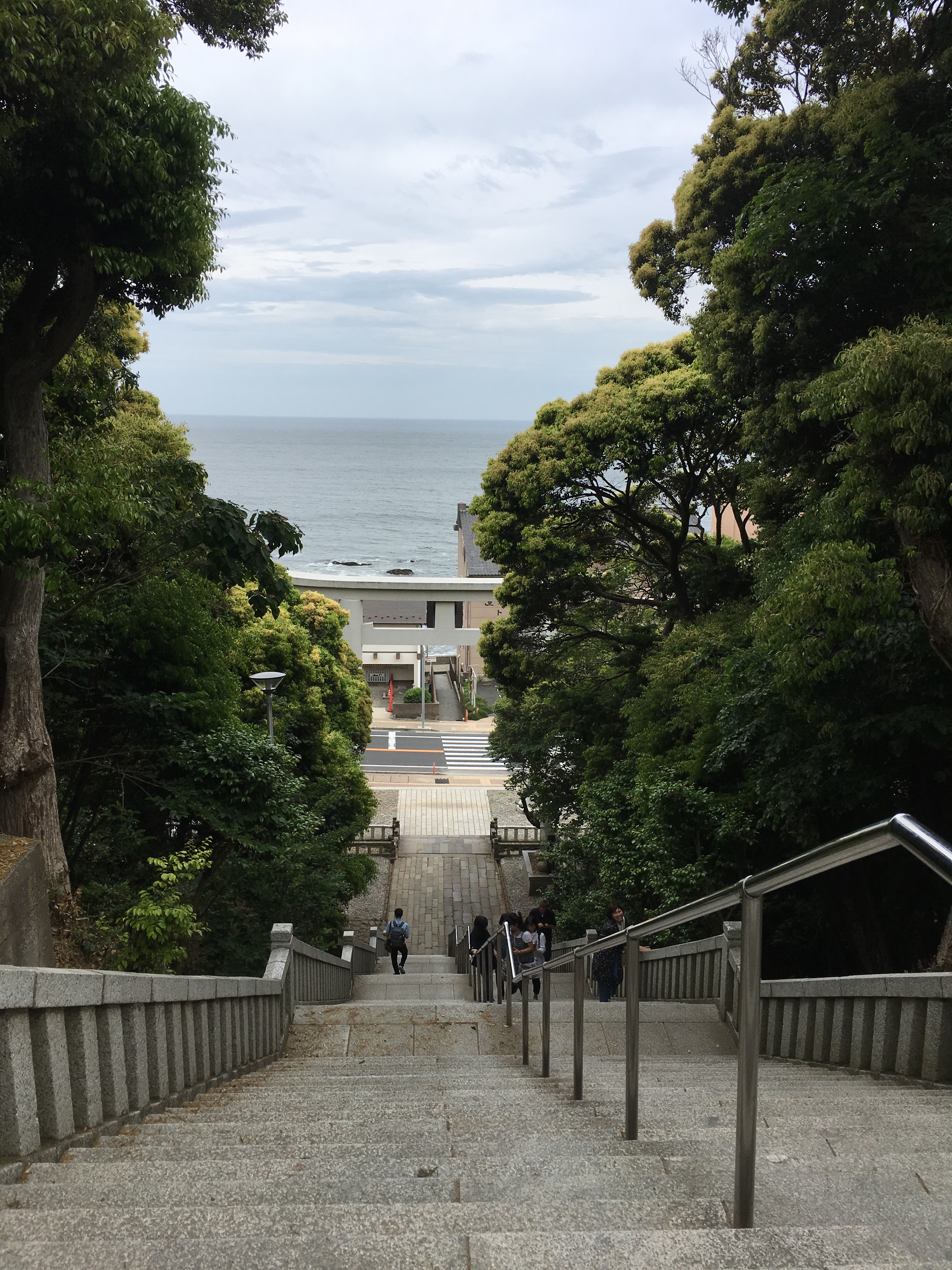
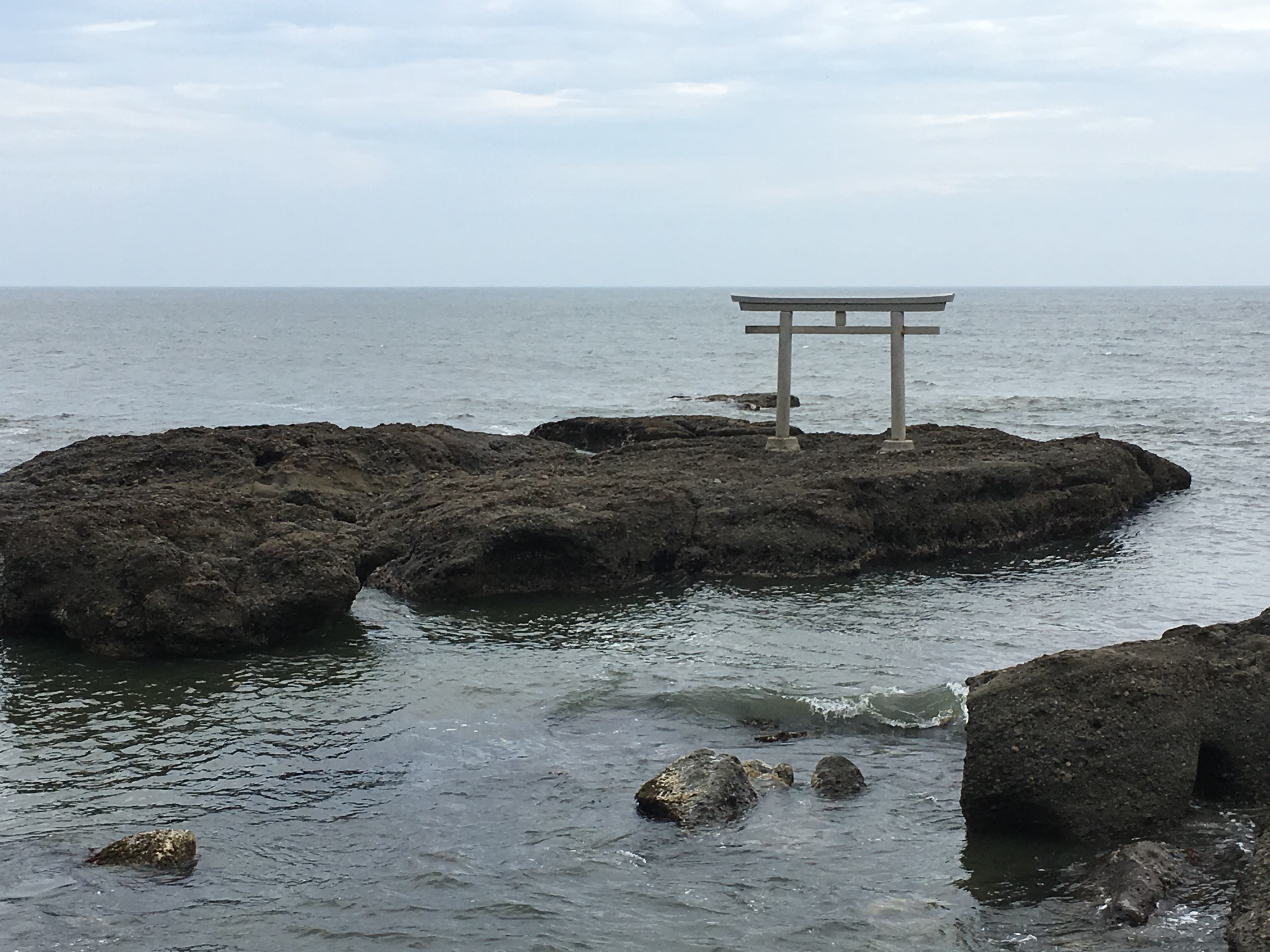
While staying in Mito, we dropped by Oarai Isosaki Shrine. There we got a taste of what a slightly smaller shrine was like. The differences in appearance between the Meiji Shrine and the Oarai Isosaki Shrine were based on size. Although there were more steps, the area of the Shrine was far smaller. The pleasing view of the ocean from the top of the steps give you a sense of accomplishment from climbing to the top. When visiting, I saw many couples. As this is a shrine dedicated to marriage and health, I was not surprised. The overall look of the Shrine seemed like a more comfortable version of the shrines seen in larger cities. The pull of the ocean draws you towards the Kamiiso-no-Torii, a torii gate located on an outcrop from the sea, which gives a tranquil and sombre atmosphere. The knowledge that a mother jumped into the ocean and died to save her son, adds the solemn air. In light of that, looking at the vast ocean and churning waves make you feel how small a person is in comparison to the broad world.
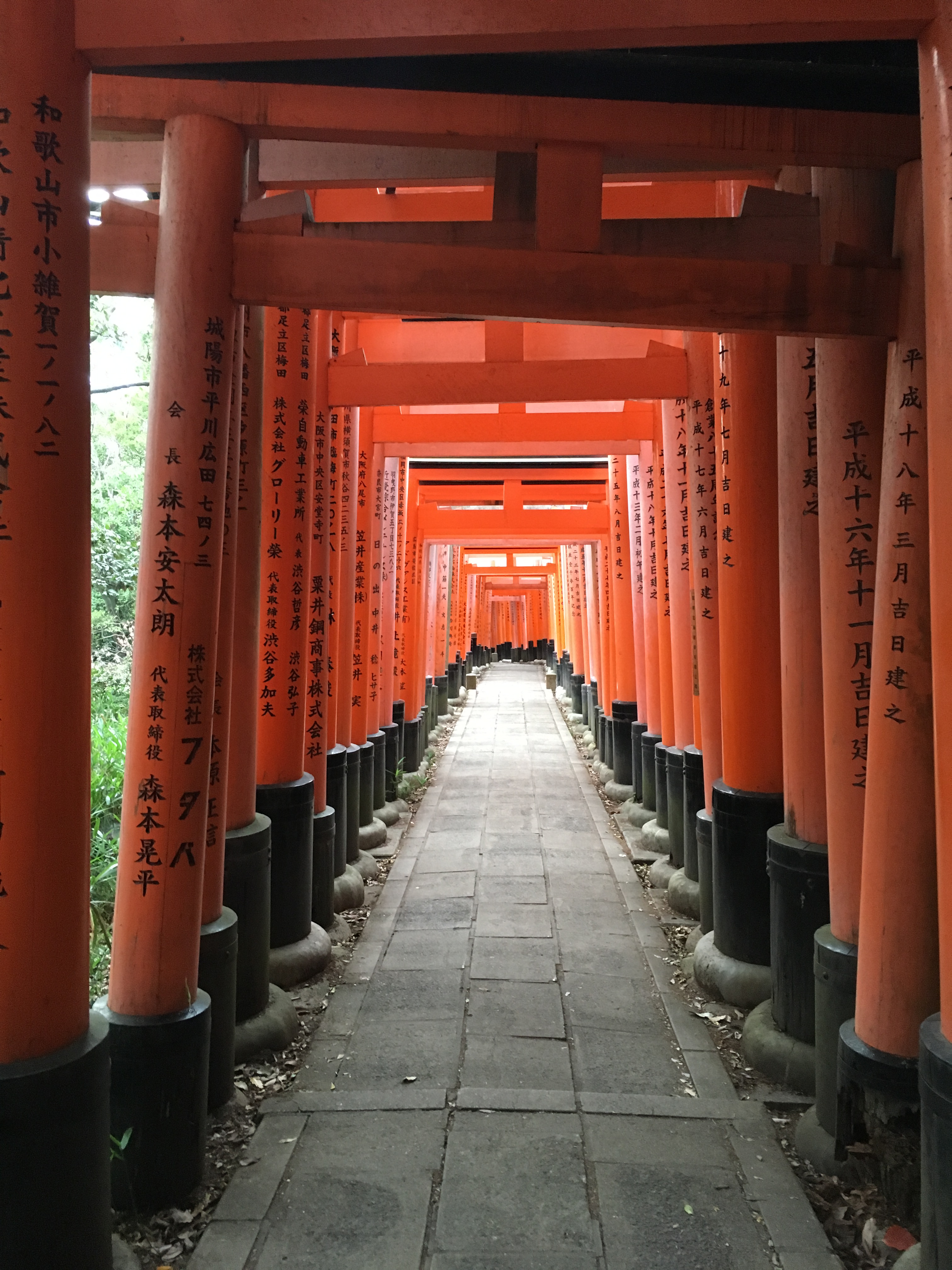
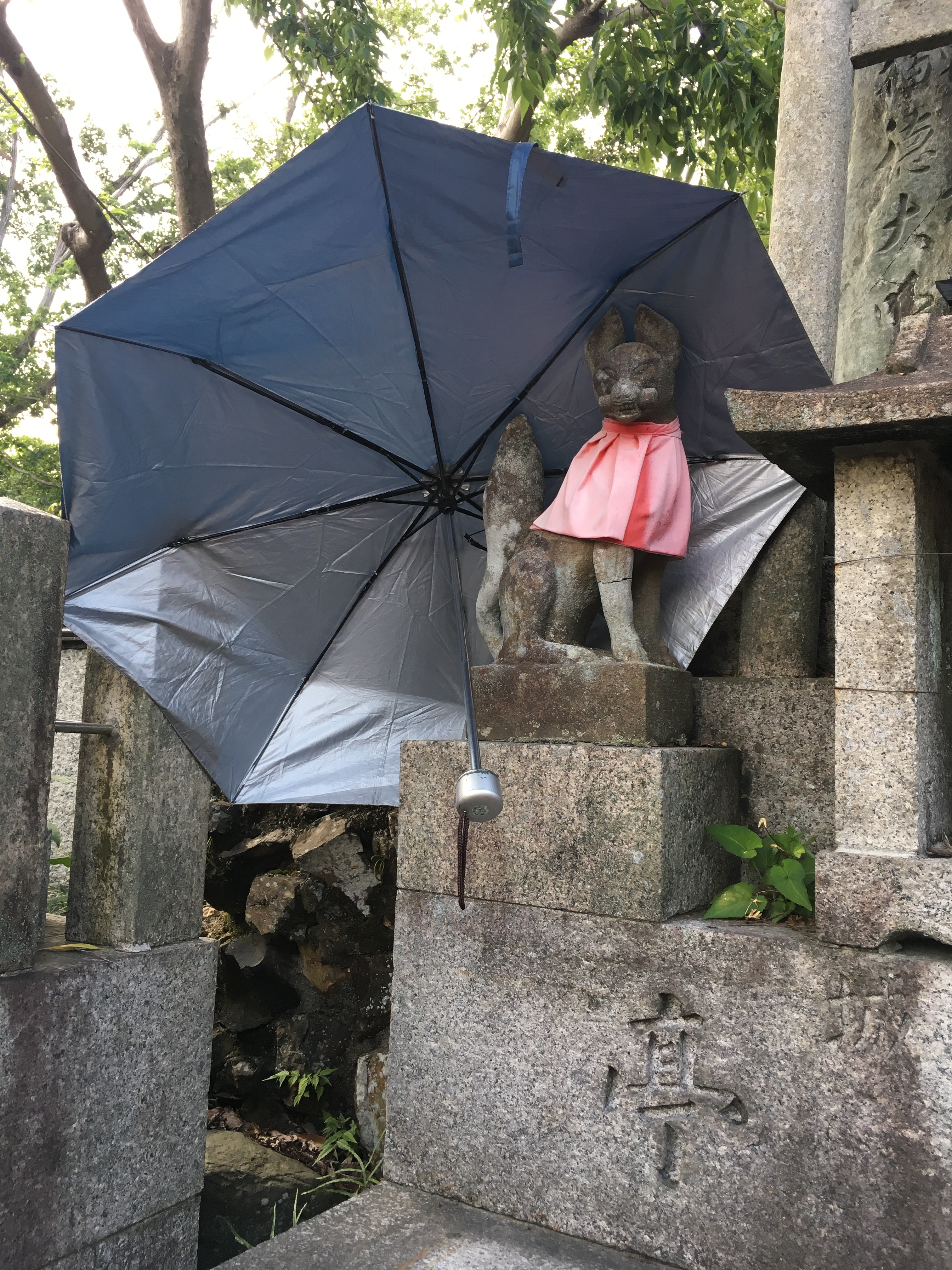
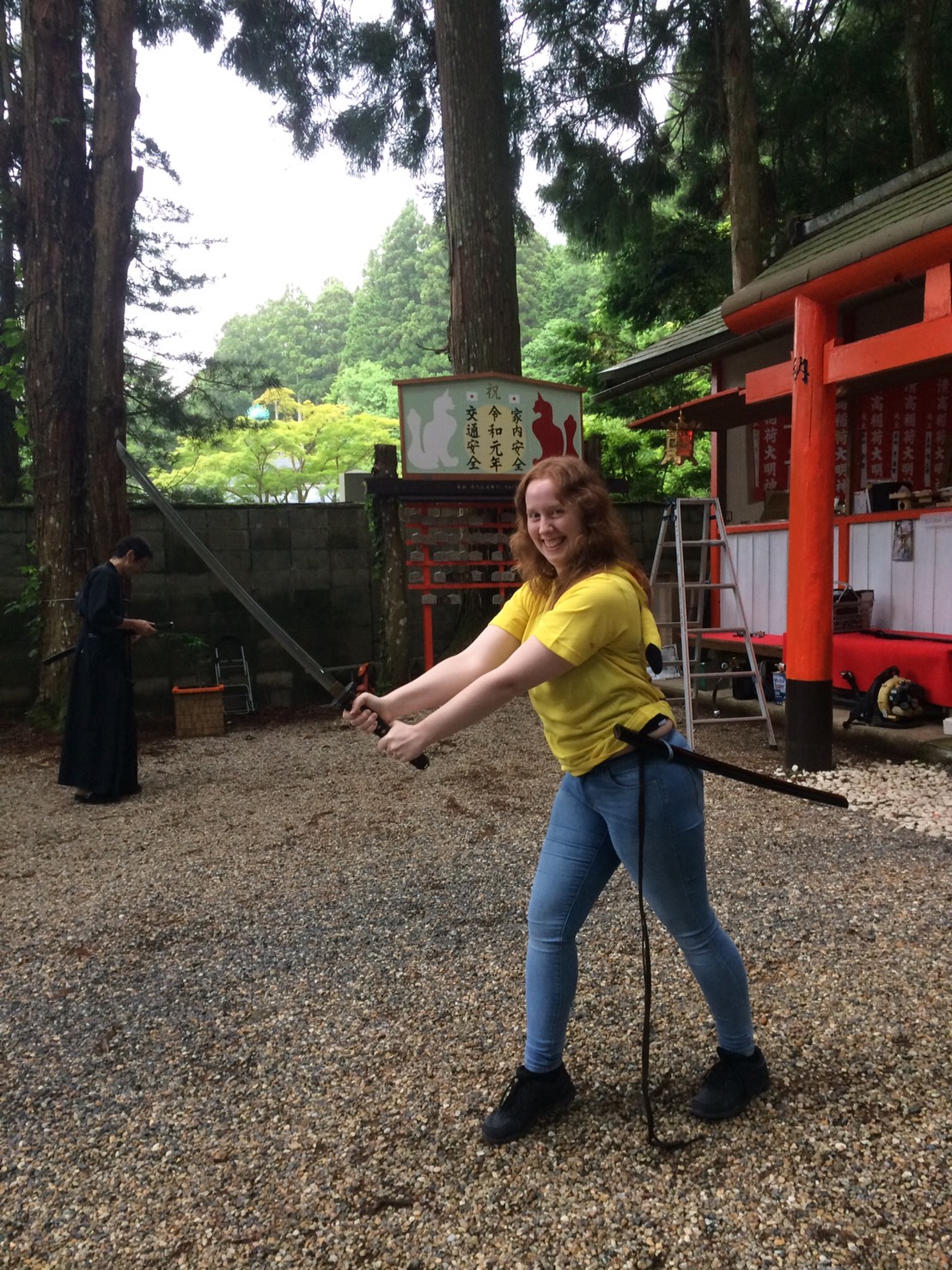
While staying in Kyoto, we visited the Fushimi Inari Shrine. As an asthmatic, I had a hard time hiking up to the top. I initially was going to stop at the midway point but decided to continue and complete the full four kilometres. I am very glad that I did, as I got to experience the full area. The main path of the shrine holds 1000 torii gates but seeing them in person makes the number seem much greater than that. Walking through the gates continuously you start to wonder if you are walking in circles. Near the midway point is a lookout area behind a collection of alters. One in particular caught my eye, as someone had placed an umbrella over one of the fox statues. It seemed like it was placed to keep the statues safe from the elements. The shrine at the top of the mountain holds a mirror of worship that is in plain view of all visitors. I later learned that it was typical for Inari shrines to have an open view of the object. On Mount Kōya-san we explored the area and came across a small shrine called Kiyotakainari Shrine, one of the 32,000 Inari sub-shrines. The family that ran it was very friendly and welcoming. They gave us a cup of tea and they even showed us a purification ritual. The head of the shrine was the father and he had a son and a daughter that helped him run the shrine, as well as his own father. The children were also taught bushido by their Sensei, who seemed to be their uncle. He ended up showing us some samurai techniques and ways of the sword. The contrast between the two shrines was fascinating. At the Fushimi-Inari Shrine, I didn’t see any priest at all, whereas I saw the head priest and interacted with his entire family. I will never forget that family and all they taught and showed me.
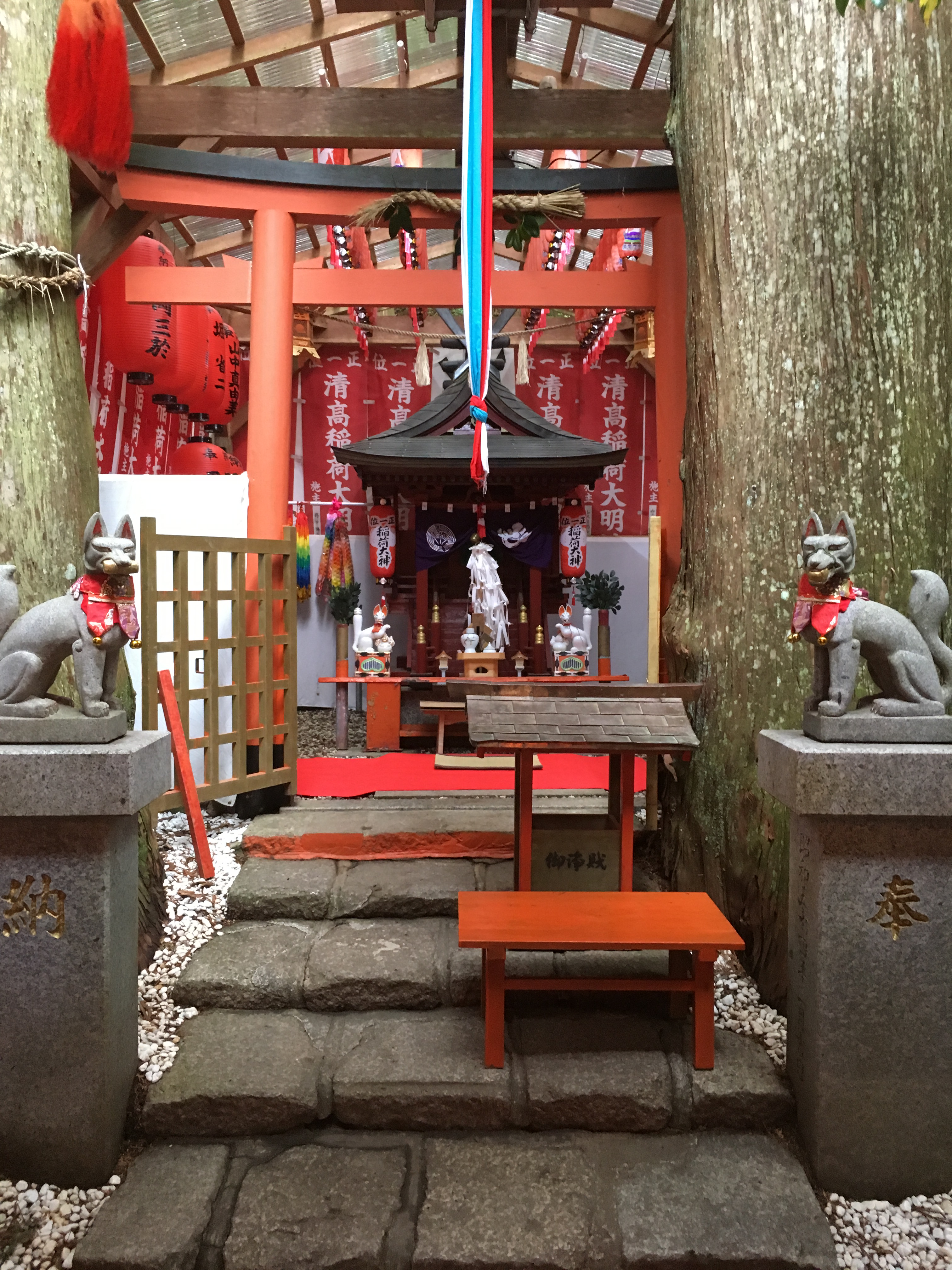
Kiyotakainari Shrine
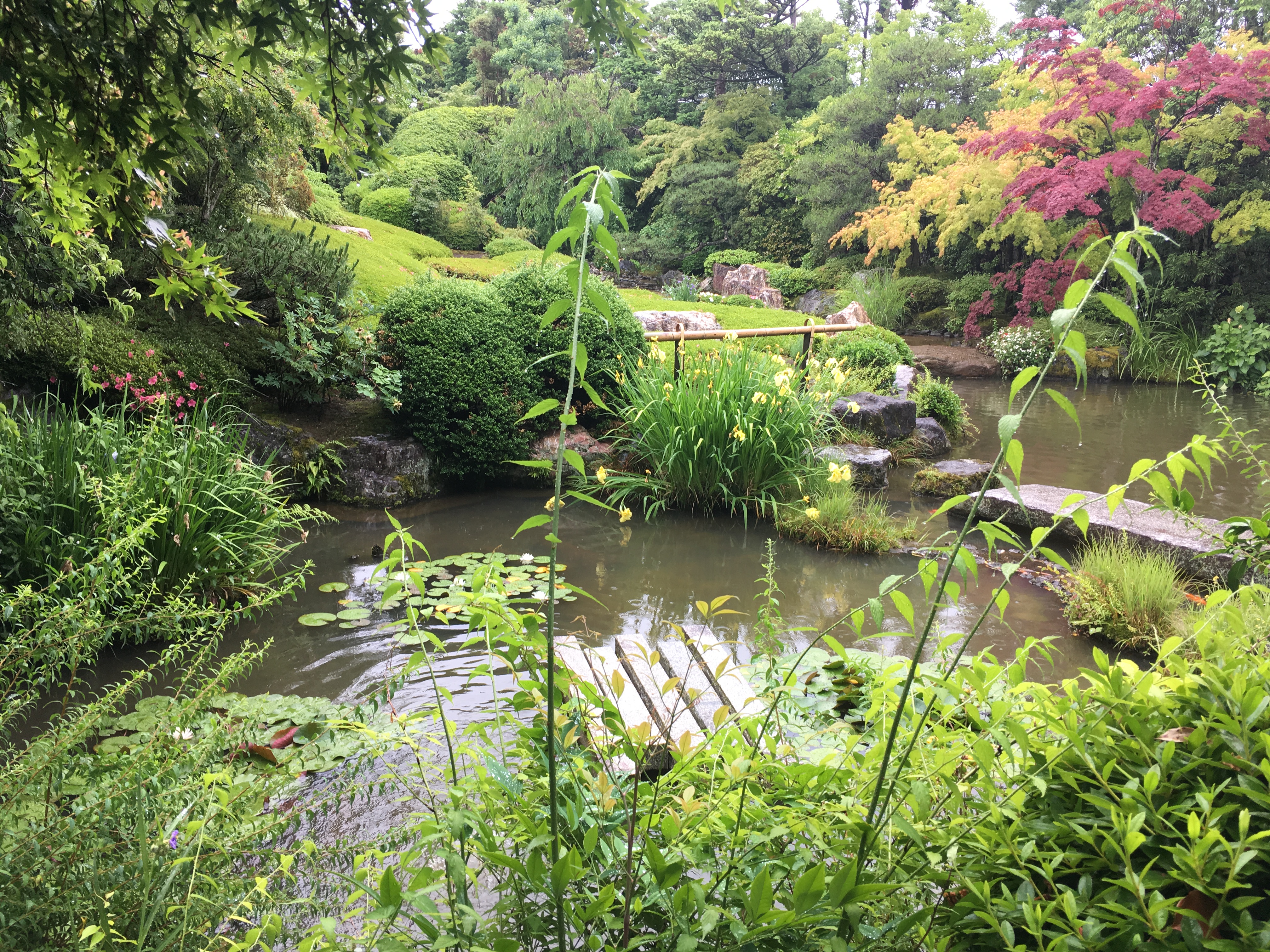
One of my favourite places that I visited, was the Zen Buddhist Temple called Taizō-in, famous for its painting,“Catching catfish with a gourd” by Josetsu. The story of the paintingintrigued me and the fact that a garden was modelled after it was scintillating. The catfish in the wall hanging symbolizes a person’s dream. The painting asks, how can I catch my dream? The garden held a pond, which was shaped like a gourd, and housed different coloured catfish. Giving the painting it was modelled after its answer was spectacular: your dream has already been caught. As I was taking pictures of the catfish, I noticed that the top of the pond (the top of the gourd), was blocked off to the catfish. Meaning they couldn’t escape to the gourd’s opening. The significance behind the catfish already in the gourd, gives hope to people across the world.
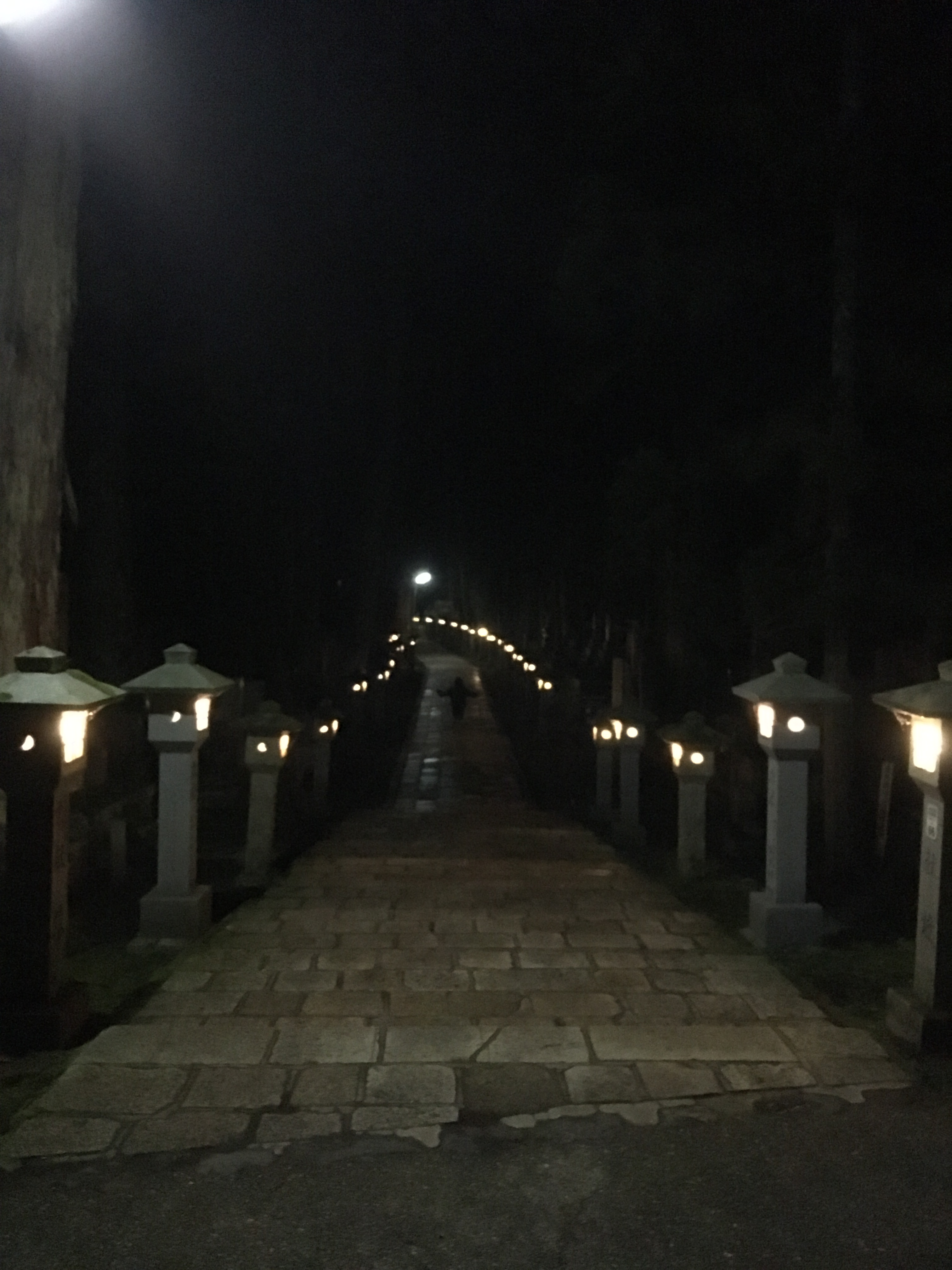
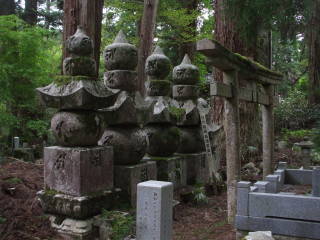
My most favourite site was Mount Kōya-san, where I stayed at Ekoin Temple and visited Okunoin Cemetery. When I first arrived at Mount Koyasan, I marveled at the smell of trees and the extremely fresh air. Ekoin Temple was splendid, the gardens were tranquil, and the traditional Japanese rooms added to the effect. It made me feel like I was in a spa. During the cemetery tour, I leared a lot of different facts about the Buddhist side of Japanese culture. The graves for instance are representations of nature. The large circle at the base is earth, and going up the grave water, fire, wind, and space. There is a sixth meaning: consciousness, but it is invisible. Therefore there is an open space above the tombstone. One of most-liked comparisons was the lotus flower. The lotus flower can grow in muddy waters and still have strong stems. A person might have sins, but they can still grow up to thrive. The other comparison that I enjoyed was the symbolism of the brain being like the moon. That the brain is bright and clear like the moon and changes shape (or emotions) like the moon. These symmetries give hope to people who have been through tough times in their lives, and I hope it helps them.
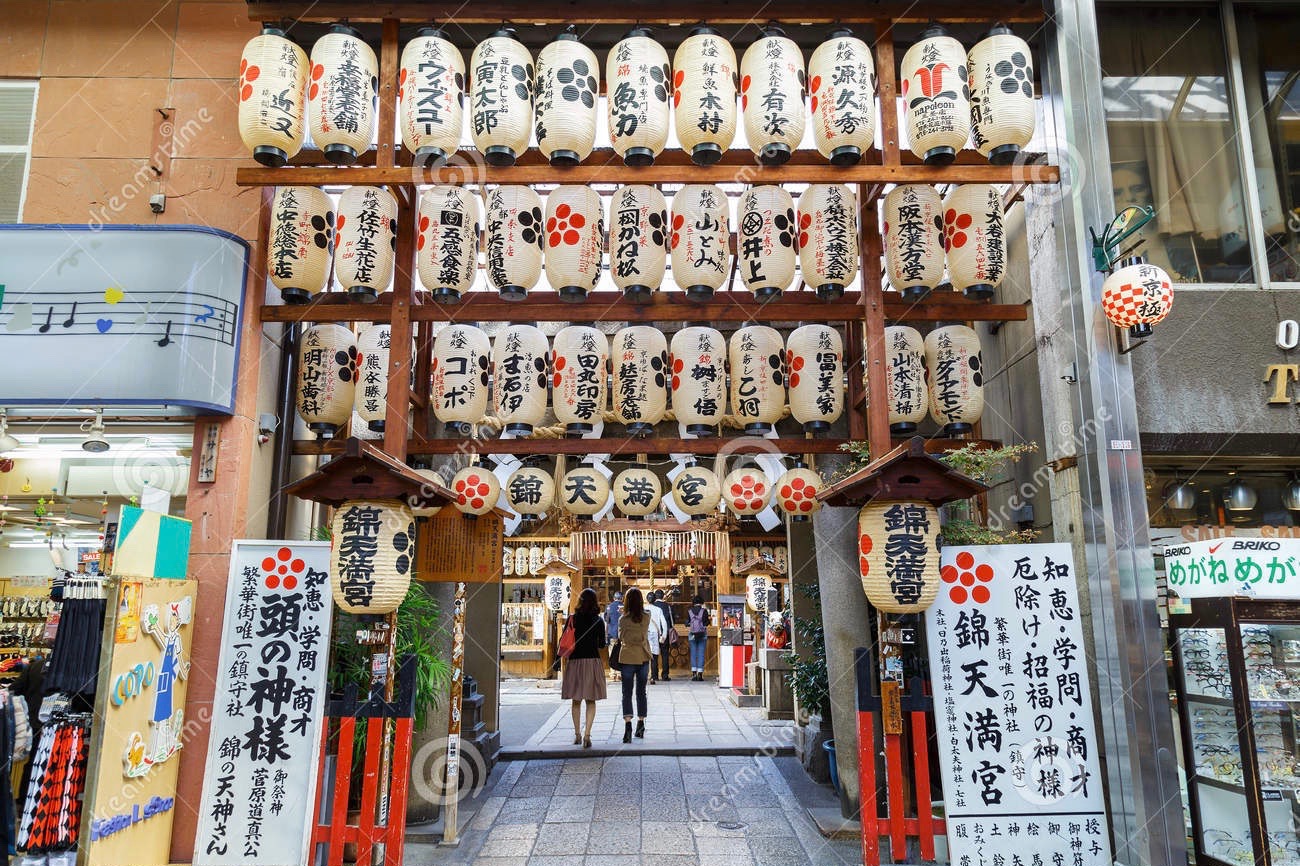
Amongst all of these shrines and temples I’ve mentioned, all of them were surrounded by nature, either man-made or organic. In Harajuku and Kyoto, however, I came across Shrines located in the city hub. The one in Harajuku was located just off a busy street, although as soon as you moved inside this shrine, the noise and pollution from the city just disappeared. I didn’t get a chance to go into the Shrine in Kyoto, but I’m curious if it had the same idea, as it was located inside a shopping centre.
Sayonara!


 Japan Field Studies