✿ Konnichiwa!
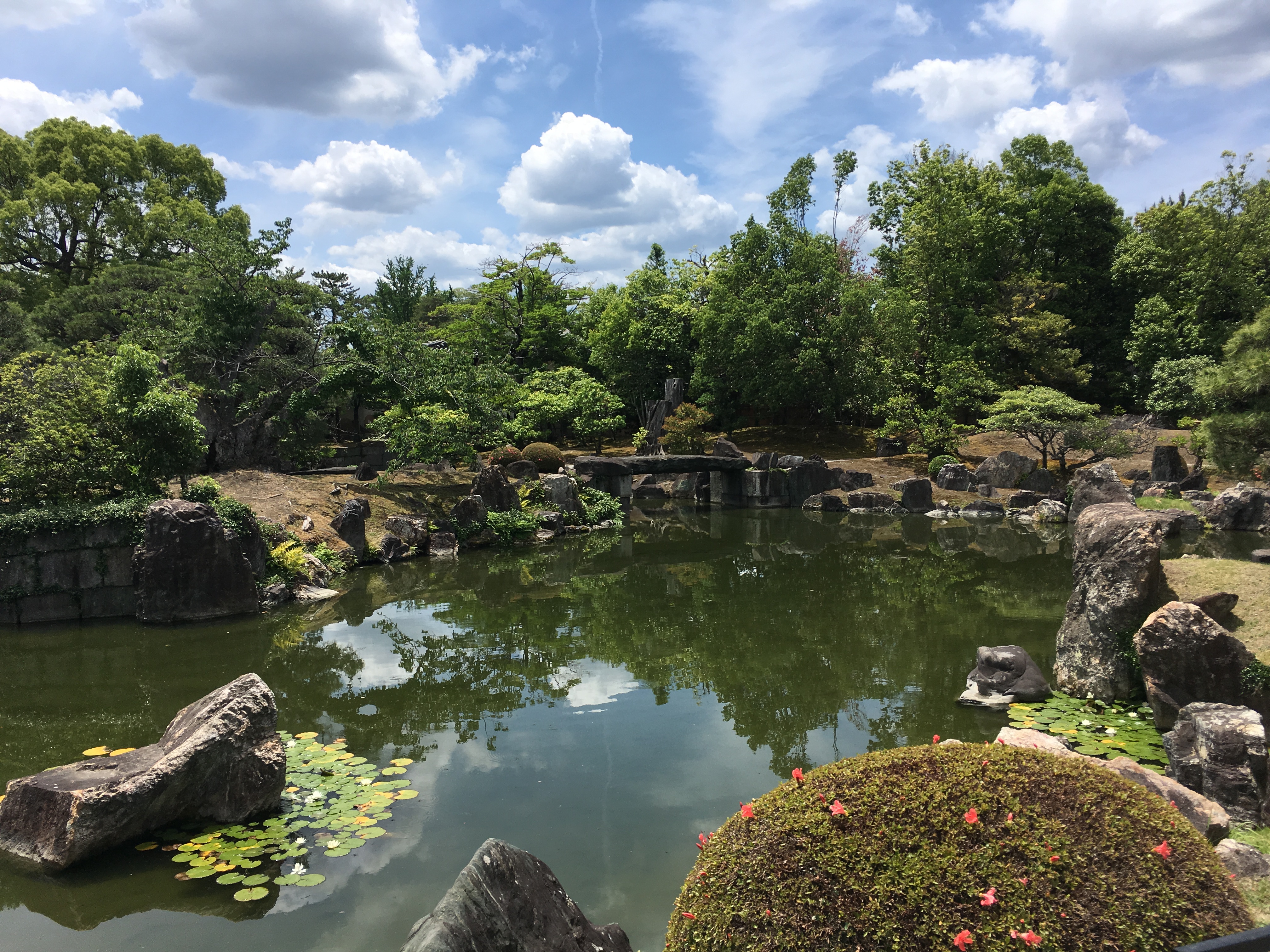
While staying in Kyoto, we visited Nijo-jo castle, famous for the “Nightingale” corridors. While I was there, I got to experience the squeaking sound that they produce, and they sounded more like an old swing set to me. I did note that the corridors did not make a sound as they got closer to the Shogun’s personal rooms. The squeaking might have, therefore, been put in to warn the samurai that someone was headed to the Shogun’s rooms. The Shogun himself would not get much warning. I also took a look at the Ohiroma, which was where the Shogun handed back the power to the emperor in 1867. The designs and some of the decorations somewhat reminded me of french baroque architecture found in the Palace of Versailles. French designs show how much wealth and power the royal family had by using real gold and famous artists of the time. Nijo-jo castle had much subtler indications of power, such as the raised platform where the Shogun sat, and the oriage-go-tenjo (or coffered ceiling) that was used to indicate the authority of the Shogun.
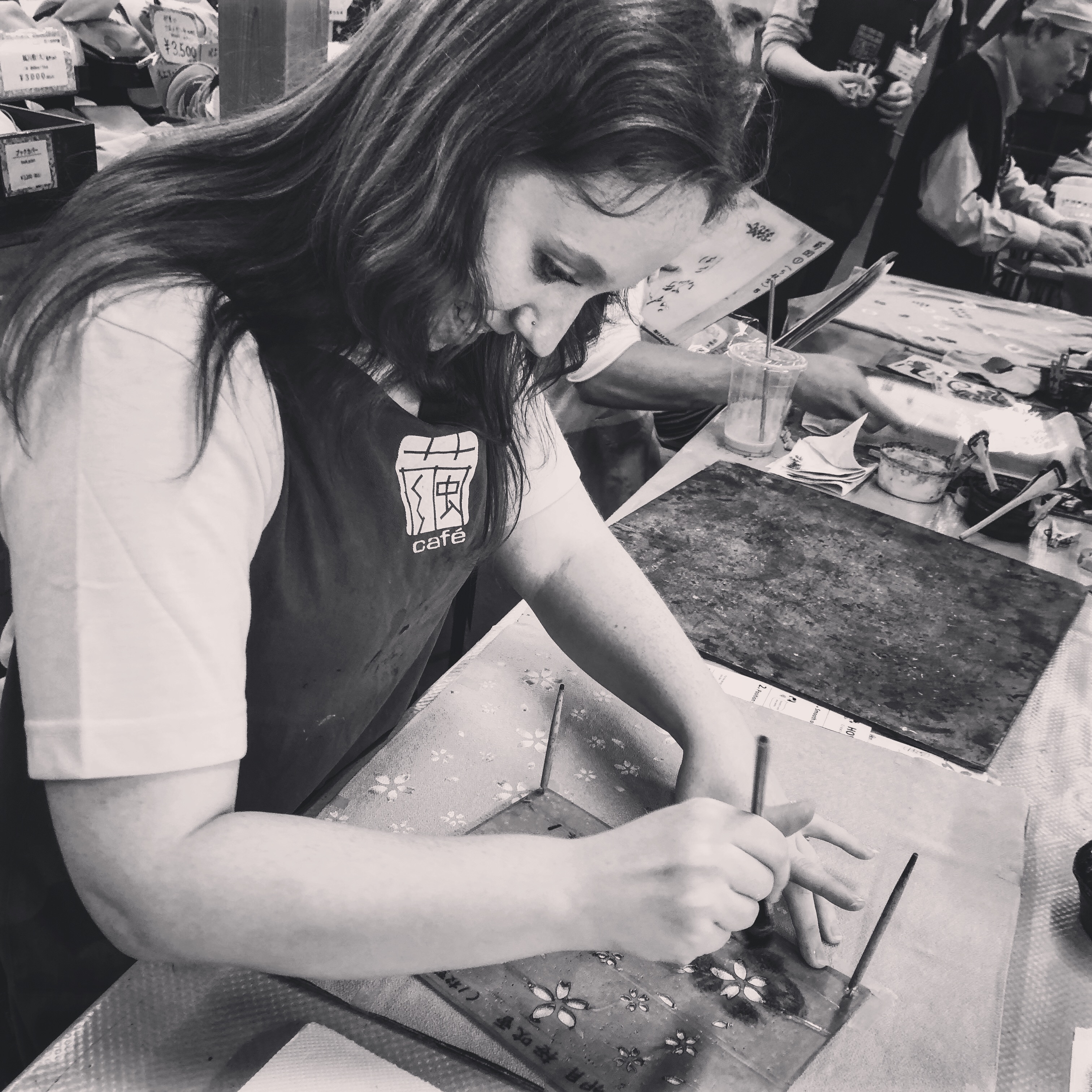
The same day we took a Kimono dyeing workshop. As they explained how to make the designs, I thought that it seemed simple, however, I was very mistaken. Even the simplest designs were difficult to do, which made me think of the many kimono’s that were made before stencils were prominent. It must have taken much effort and patience (of which I have hardly any) to produce the intricate patterns regularly.
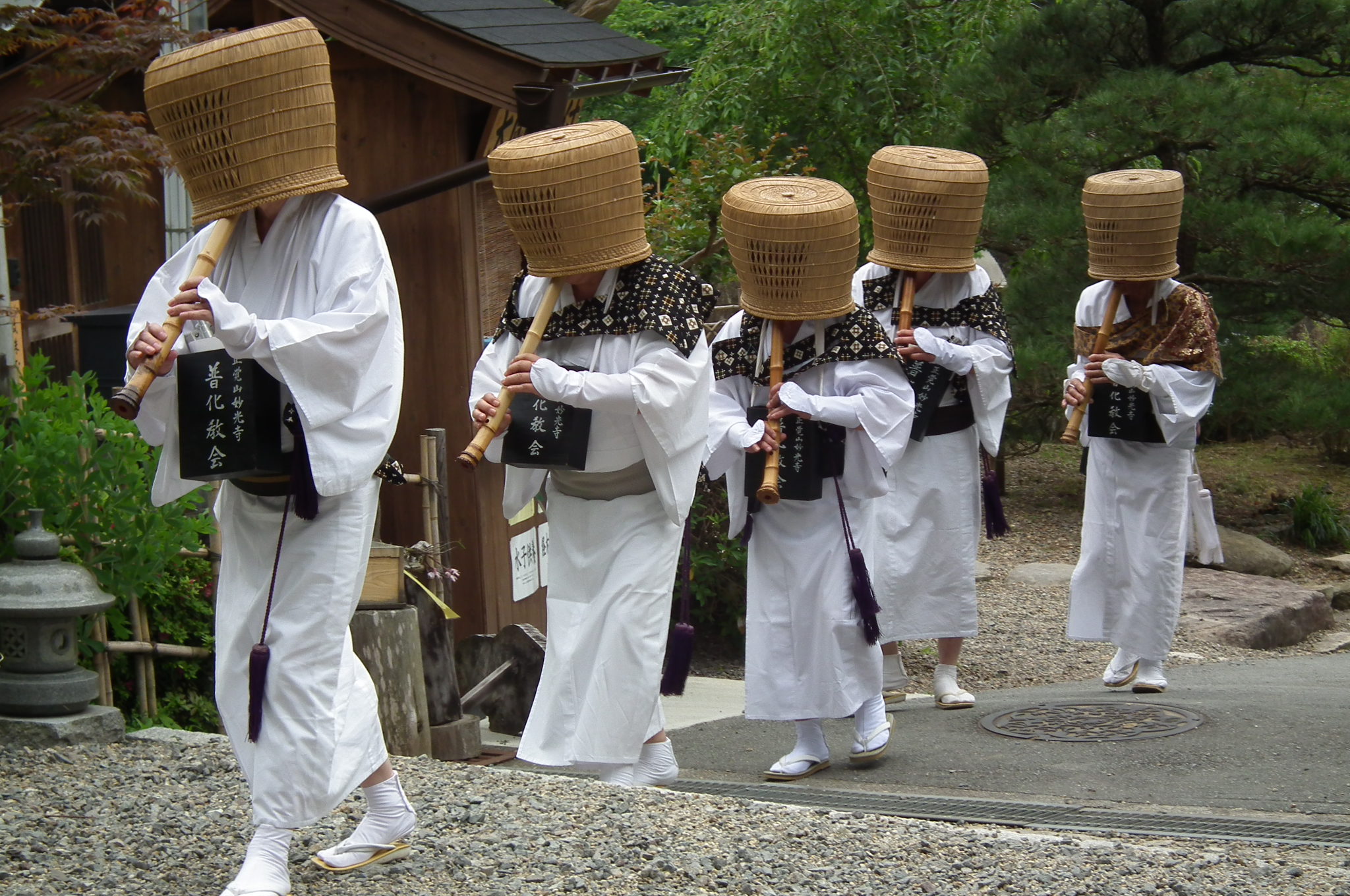
On the last full day in Kyoto I visited the Samurai and Ninja museum. I went on a historic guided tour and was shown some ancient artifacts as well as some battle armor. One of the outfits, I learned, was called a komusō, which was part of the Fuke School of Zen Buddhism. It is a plain white garment with a tengai or tengui, which is a bascinet worn on a monk’s head. The tengai represents the manifesting absence of ego. Apparently, because it was the only way to get past the borders without being scrutinized, samurai and ninja used to wear them in order to get past security and spy on opposing sides.
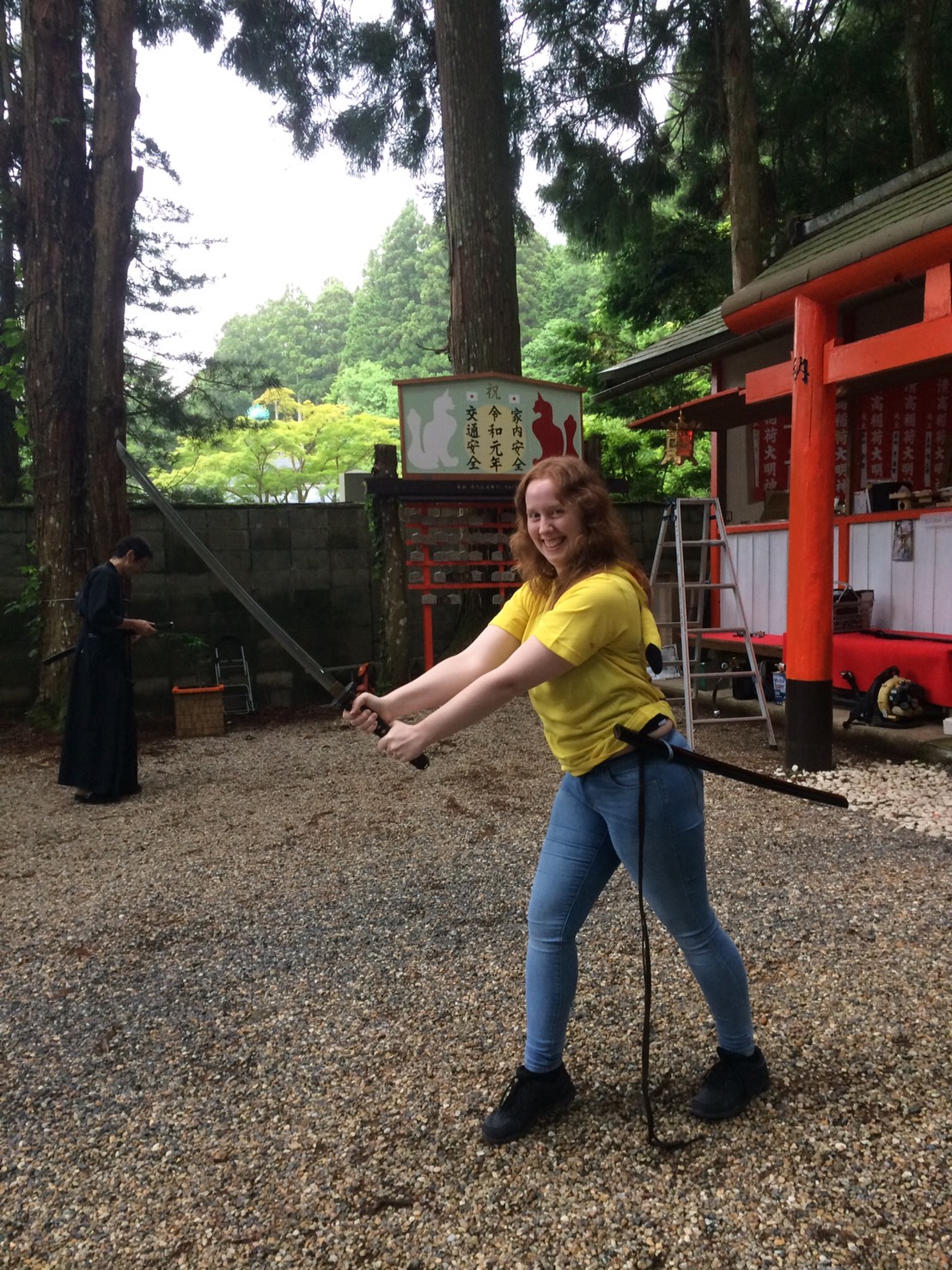
On the last day, a group of us explored the area around Ekoin Temple. There we found a small Inari shrine, run by one family. They were extremely kind and demonstrated many rituals and practices. One of the practices was on samurai techniques demonstrated by the sensei of the family. The sensei taught us that all samurai were taught to be right handed; there were no left handed samurai. They also explained that the katana must always go on the right side of the samurai when in front of a superior to show that he meant no harm, as a samurai would have to pass the katana to the other hand in order to draw his sword. They even let us try some techniques with a dull katana. It was a special experience that all of us enjoyed.
Sayonara!
 Japan Field Studies