✿ Konnichiwa!
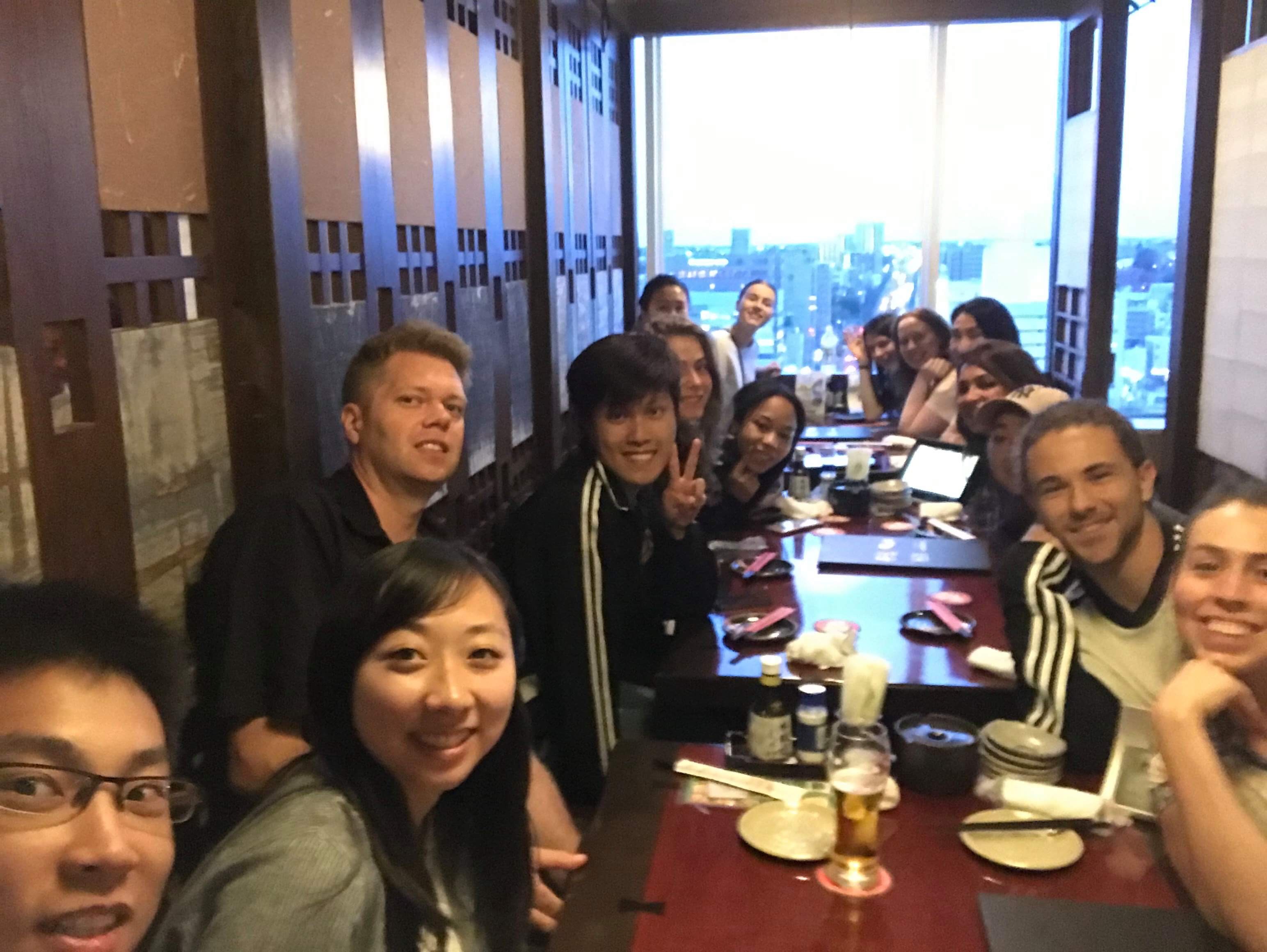
Amongst the many Japanese experiences, izakaya was my favourite. The first night in Mito Sora, Lucy, Jarrick, Guilherme, and I went to an izakaya called Iroha Nihoto. We had a wonderful time and shared many dishes. The second night the whole Langara group went, and it was even more boisterous and fun. Izakaya restaurants are an interdependent system as the style is to share dishes, and sometimes even for other tables to steal them. While I was there, I noticed many business men hanging out with their co-workers, as is the norm in Japan. If business men do not go out with their colleagues, they are not considered a team player. Even going for one drink can elevate their “face” in front of their peers.
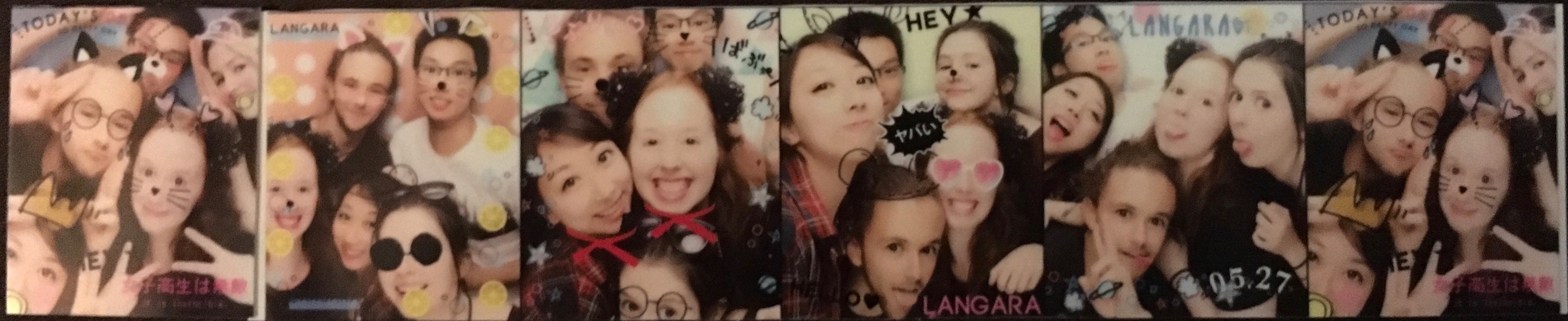
In the arcade a group of us took photos in the sticker booth. This booth modified our eyes (so they were bigger), made our faces slimmer, our mouths thinner, and airbrushed out blemishes. The overall look makes us appear more like dolls then our true faces. This made me think of honne and tatemae. The pictures taken in booths like this are made to be an outward face, as they modify them to create the perfect face. This can also tie into kawaii culture, and how everything should be cute, even our adult faces.
On the second day in Mito, I was also very surprised to witness a young couple (definitely younger than 30) with two young children. The norm in Tokyo was usually one parent and one child. The young couple proceeded into the game centre with their kids. Another commonality was the two-child family. In Tsukiji Fish Market I witnessed a family of five shopping. Statistics state that 1.4 children are born per Japanese woman. It made me think of questions that I wouldn’t get any answers to. Did the young couple fall in love while at school? Were they outside of the norm in some way? Were all three children planned or was one or more a “surprise”? All questions that I could not ask and to which I would probably not understand the answer.
Mito, I noticed, had more of a language barrier. The menus and buildings around the train station have English writing; however, the farther you get from a tourist area, the less English you will see and hear. Quite often, I struggled a bit in conversing with people, as I can usually understand what they are saying, but I have trouble speaking the language. Some restaurants also do not have an English menu. While we were in Iroha Nihoto, a member of the wait staff came in and asked Sora to translate for another group, as neither side could communicate with each other. In Tokyo that was less common. I was able to communicate directly with the individuals there, even if it took a little longer to do so.
Sayonara!
 Japan Field Studies